Dominion Biotech maintains a growing biobank of low-passage, clinically annotated patient-derived cell models, sourced through established NHS clinical partnerships. Whether you need a model to run yourself, a custom panel built to your target, or a full assay service, we work with you to get there.
Choose the route that fits where your programme is today.
Access mutations you won't find in a standard biobank, ready to run in your own lab.
See our panels →Commission a panel built around your target, developed by the team behind our biobank.
Discuss a custom panel →Run your compounds against patient-derived models, delivered directly by our scientific team.
Discuss an assay project →Most CROs in this space keep their patient-derived models in-house, running studies on your behalf but never letting the model itself leave the building. We do it differently: license a model and it's yours to run, in your own lab, on your own terms.
Commercial terms in this space are often built around long contracts and hard exit clauses, on the assumption that a customer who's locked in won't look elsewhere. We think that gets things backwards - if the work is good, you'll come back because it's good, not because leaving is difficult.
Once you've licensed a model, we don't take a royalty on whatever your programme goes on to discover or develop.
Licensing is quoted per model, per panel, or for a custom cohort, so the structure fits the scope of what you'll license. For project-based work - custom panel builds and assay programmes - there's a short 30-day notice period rather than a long fixed commitment, so the relationship can flex as your programme develops. Where data is shared as part of a project, that's agreed as part of the contract, not something we hold over you afterwards.
Dominion's biobank is built from patient-derived cancer models sourced through established NHS clinical partnerships, developed under full ethical consent. Every model is low-passage and clinically annotated, with treatment history and tumour staging recorded alongside it. New samples arrive continuously through our clinical network, so the biobank grows week on week. Most panels are available to license for your own lab, or through our assay services - access route is shown for each.
A panel of KRAS-mutant NSCLC models spanning common and rare variants, including atypical mutations such as G12F dinucleotide deletion-insertions found in under 1% of KRAS-mutant NSCLC. Alongside these sit the more common actionable variants, including G12C and G12D.
Compound and atypical mutations rarely available for license elsewhere, such as a de novo triple mutation combining G719A, L861Q and TP53.
A panel spanning contrasting clinical contexts, from post-chemotherapy resistant disease to treatment-naive metastatic presentations.
Primary AML, MDS and CMML samples covering bone marrow and peripheral blood, including matched pre- and post-treatment timepoints from the same patients.
License a model to run in your own lab against your own assay platform, or ask us to run the assay for you. There's no minimum commitment across the panel - license or commission a single model, or build a broader combination to suit your programme. Get in touch and we'll talk through what fits.
Commission a panel built around your target.
If the model you need doesn't exist yet, we'll build it. Working through our established NHS clinical network, Dominion develops custom PDC panels against the mutation, tumour type or treatment context your programme requires. You get a panel purpose-built for your target, developed by the same team that built our existing biobank.
We source primary patient material to your specification, then bank it as a low-passage, clinically annotated model to the same standard as our existing panels.
Tell us what you're looking for and we'll talk through feasibility, timeline and terms.
Discuss a custom panelRun your compounds against patient-derived models.
Cell lines can't answer every question. When you need a patient-level view of how a compound performs, Dominion runs your assays directly against our patient-derived models, delivered by the scientific team that built the panel.
Working directly with patient-derived models means your data reflects real clinical biology from the outset, not an adaptation from an immortalised line. That gives you a patient-level view of resistance and combination response that a cell line simply can't provide. Our haematological malignancy panel - primary AML, MDS and CMML samples with matched pre- and post-treatment timepoints - is available exclusively through this route.
We work with you to design the assay around your compound and your question, then deliver clear, contextualised data your team can act on directly.
Discuss an assay projectIn collaboration with Servier
Venetoclax transformed AML treatment. Now resistance is eroding those gains. AML is also one of the most challenging cancer types to grow and maintain in vitro, which makes studying resistance in primary patient material technically demanding. The central questions - which patients will fail, which resistance mechanisms can be targeted, and whether combination strategies can improve outcomes - cannot be answered in a cell line. They require primary material from real patients, at the right clinical timepoints, tested with the right tools.
Dominion built a panel of 40 primary patient samples sourced through its wide clinical network. The panel was predominantly AML but also included MDS, CMML and related myeloid malignancies, covering bone marrow and peripheral blood across newly diagnosed and relapse-refractory cases. Critically, it included matched pre- and post-treatment timepoints from the same patients. For each sample, Dominion ran flow cytometry-based cell death assays across a drug combination matrix, quantifying drug-induced death at the individual patient level using DRAQ7 viability discrimination. Drug interactions were characterised by Bliss independence modelling, providing a rigorous basis for identifying true synergy.
A panel of this scale, sourced from NHS clinical partners and tested at multiple treatment timepoints, is rare. It gives drug developers something genuinely hard to obtain: a patient-level view of how resistance evolves, and how combination strategies perform against it. That is the kind of data that informs go/no-go decisions and shapes clinical strategy.
"Dominion gave us access to primary patient material that is genuinely difficult to obtain, and the scientific expertise to make sense of it. Their ability to source clinically annotated samples at this scale and deliver clear, well-contextualised data from them was invaluable to our AML programme. We could not have generated these insights any other way." — Nicolas Molinie, Oncology Target Discovery Group Leader, Servier
Interested in running your compounds against our patient-derived models across haematological and solid tumour indications?
Get in touchServier, Inaphaea, Science Exchange, Scientist.com and OBN.
Dominion Biotech is a specialist oncology CRO based at Alderley Park, Cheshire. We build and maintain a growing biobank of patient-derived cancer models, and put that biobank to work through licensing, custom panel development and assay services for drug developers. Our focus is on turning patient biology into decision-useful data - models and results your team can act on directly, without needing to translate findings from an immortalised cell line back to the clinic.
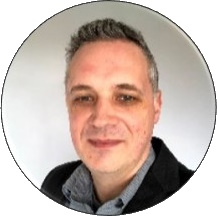
30 years in life sciences with an AI focus. Former CEO of Rinicare and Optasia Medical. PhD in Machine Learning and Computer Vision for Breast Cancer, University of Manchester.
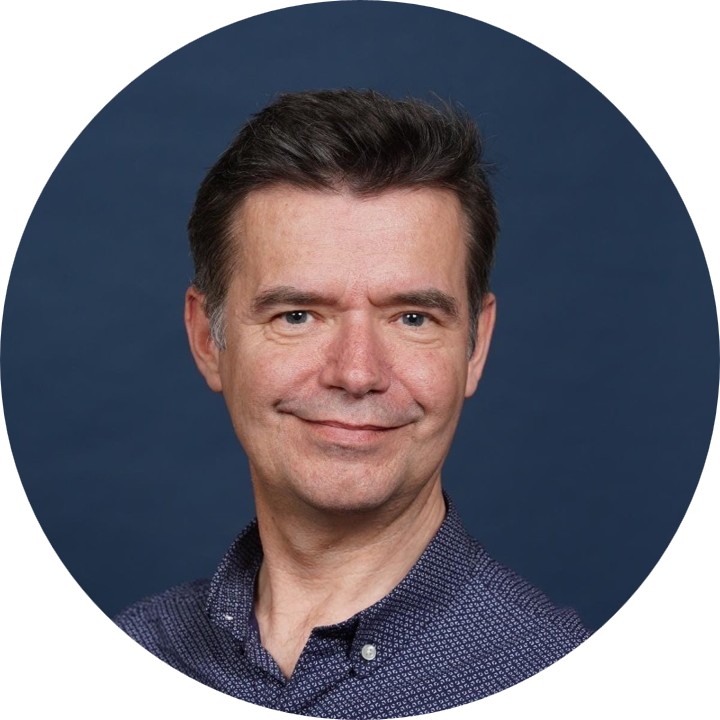
Co-founder of Imagen Therapeutics, serving as CSO for 14 years. Previously in cancer research at AstraZeneca. PhD in Cancer Biology and Immunology, University of Birmingham.
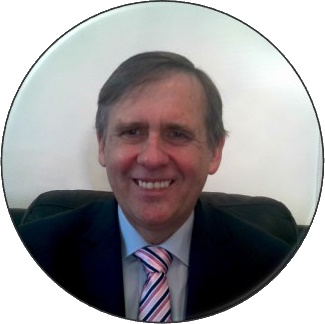
Former CEO and co-founder of Imagen Therapeutics. Previously in Systems Biology at AstraZeneca. Wellcome Research Fellow. PhD in Cancer Biology, University of Manchester.
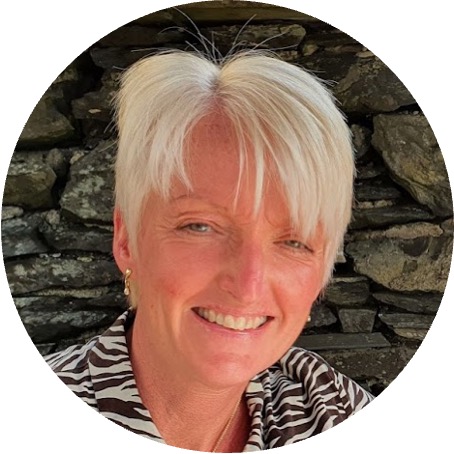
Chartered Accountant with extensive commercial experience across a range of sectors, latterly healthcare software and services with an AI focus. Qualified with PwC in Manchester.